
Beyond the Checklist: Strategic TMAs for Definitive Tissue Cross-Reactivity
In the rigorous path of IND-enabling studies, the tissue cross-reactivity (TCR) study is a critical gate. Mandated by regulatory bodies, its purpose is to assess the off-target binding profile of a therapeutic antibody across a panel of normal human tissues. For many, this has become a "check-the-box" exercise—a standardized, transactional step on the way to the clinic.
This checklist mentality, however, can introduce profound risk to pre-clinical validation studies. A TCR study is not merely a regulatory hurdle; it is one of the most important preclinical safety assessments for biologics. Executed strategically, using a specifically curated Tissue Microarray (TMA), TCR studies provide a rich dataset that provides "Deep Insights" into novel therapeutic antibodies, their comparative performance, and their associated risk in human patient trials. This approach proactively de-risks a program by predicting potential on-target, off-tumor toxicities and informing patient selection strategies long before the first dose is administered to a human.
The High Cost of a "Check-the-Box" TCR Study
Standard, off-the-shelf tissue panels for biologics safety testing often prioritize cost over quality. This can manifest in several ways: poorly preserved tissues, minimal representation of key organs, lack of pathology verification, and ambiguous diagnoses. The consequences can be catastrophic for a drug development program:
False Negatives: An off-target binding site is missed due to poor antigen preservation in a low-quality tissue core. The liability proceeds undetected into clinical trials, where it can manifest as unexpected and serious adverse events, jeopardizing patient safety and the entire program.
False Positives: Non-specific staining in poorly fixed tissue leads to the identification of a "hit" that isn't real. This sends teams on expensive, time-consuming wild goose chases to investigate a phantom risk, delaying timelines and wasting resources.
Missed Context: Standard panels lack the strategic inclusion of diseased tissue or specific patient populations. They can confirm a target's presence in a normal organ but fail to reveal the level of expression, leaving critical questions about on-target, off-tumor toxicity unanswered.
Cheap data becomes incredibly expensive when it leads to clinical failure. A TCR study is too important to be treated as a commodity.

The Strategic TMA: An "Agile Insurance Policy"
The Offspring Biosciences approach reframes the TCR study as a strategic asset. By custom-building each TMA, we transform the off-target binding assay into a powerful tool for decision-making, embodying our role as a Strategic Validation Partner.
Our process is built on a foundation of "Pharma-Grade Expertise":
Pathology Oversight as a Core Strength: We don't just source tissues; we curate them. Every single tissue sample is reviewed to ensure quality and diagnostic accuracy. This eliminates the ambiguity and risk inherent in standard panels and provides a foundation of "Digital Truth."
Custom TMA Construction: A one-size-fits-all approach is insufficient. We construct high-density TMAs tailored to the specific biologic being tested. This allows for high-throughput screening of 100+ donor tissues on a single slide. We can strategically include multiple donors for each organ to account for human variability and even place diseased tissue alongside normal tissue to assess expression differences.
The "Agile Insurance Policy": Before committing to a full, expensive GLP-compliant TCR study, we can run a non-GLP safety screen. This high-throughput immunohistochemistry screening, configured at the level of ISO 17025, allows us to kill bad drugs fast or accelerate good ones with high confidence. It’s a smart, agile investment that protects the larger investment of the full IND-enabling program.
This methodology moves beyond a simple binding assessment. It provides a quantitative, context-rich map of your molecule's behavior in the only environment that matters: the human body.
SIDEBAR: Preclinical Safety and Toxicology At the core of what we do is protecting your company's most valuable assets: its clinical candidates and the patients who will receive them. While a standard TCR report gives you a data point, strategic TCR studies provide you with answers. Imagine knowing not just if your antibody binds to normal pancreatic tissue, but also how that expression level compares to your tumor target. Is the on-target, off-tumor risk manageable? This is the difference between a check-box and a decision-making tool. Investing in a robust, pathology-specific preclinical safety assessment is a direct investment in your clinical success. It provides the clear, defensible data required for a successful FDA submission and, more importantly, the confidence to make a definitive "Go/No-Go" decision. It’s about mitigating risk at the earliest possible stage, where the cost of failure is lowest.
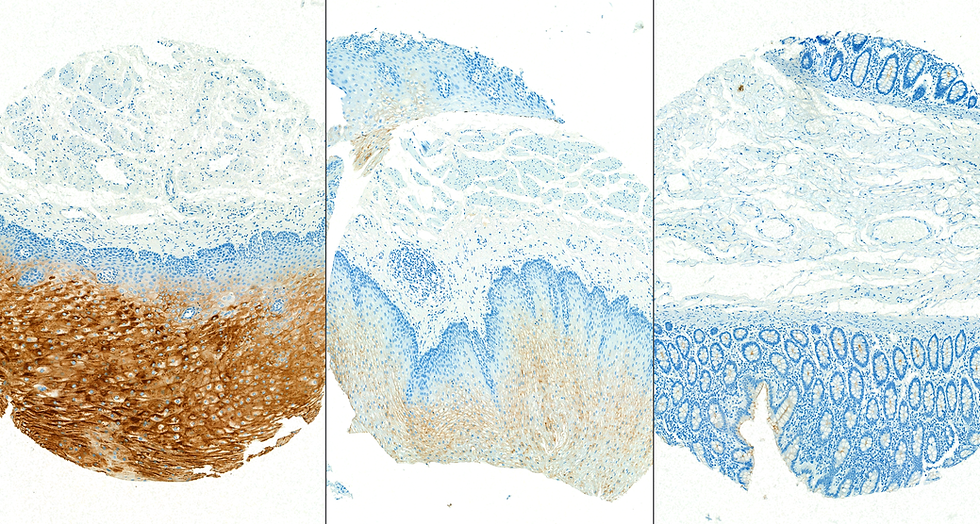
Sidebar: Precision Engineering for Confident Results A high-quality TCR study result begins with high-quality tissue processing. Our core strength is the expert handling of delicate samples to preserve morphology and, crucially, antigenicity. We utilize precision TMA machinery to build high-density arrays, placing cores from multiple donors and organs onto a single slide. This ensures that every tissue is stained under the exact same conditions, eliminating the variability common in single-tissue staining runs. This rigorous process control, combined with our expertise in developing sensitive and specific IHC assays, guarantees a reproducible, high-confidence dataset worthy of a pivotal IND-enabling study.
Investing in Confidence
A tissue cross-reactivity study should not be the step in your development plan where you cut corners. It is the fundamental safety evaluation for your biologic, the first comprehensive look at how your molecule will interact with human tissues.
📖 Looking for the complete guide? Following up on this article, don't forget to read our comprehensive white paper on TCR studies published last week:


